Theme 3
Accelerating and colliding
Particle accelerators are crucial for exploring the particle world.
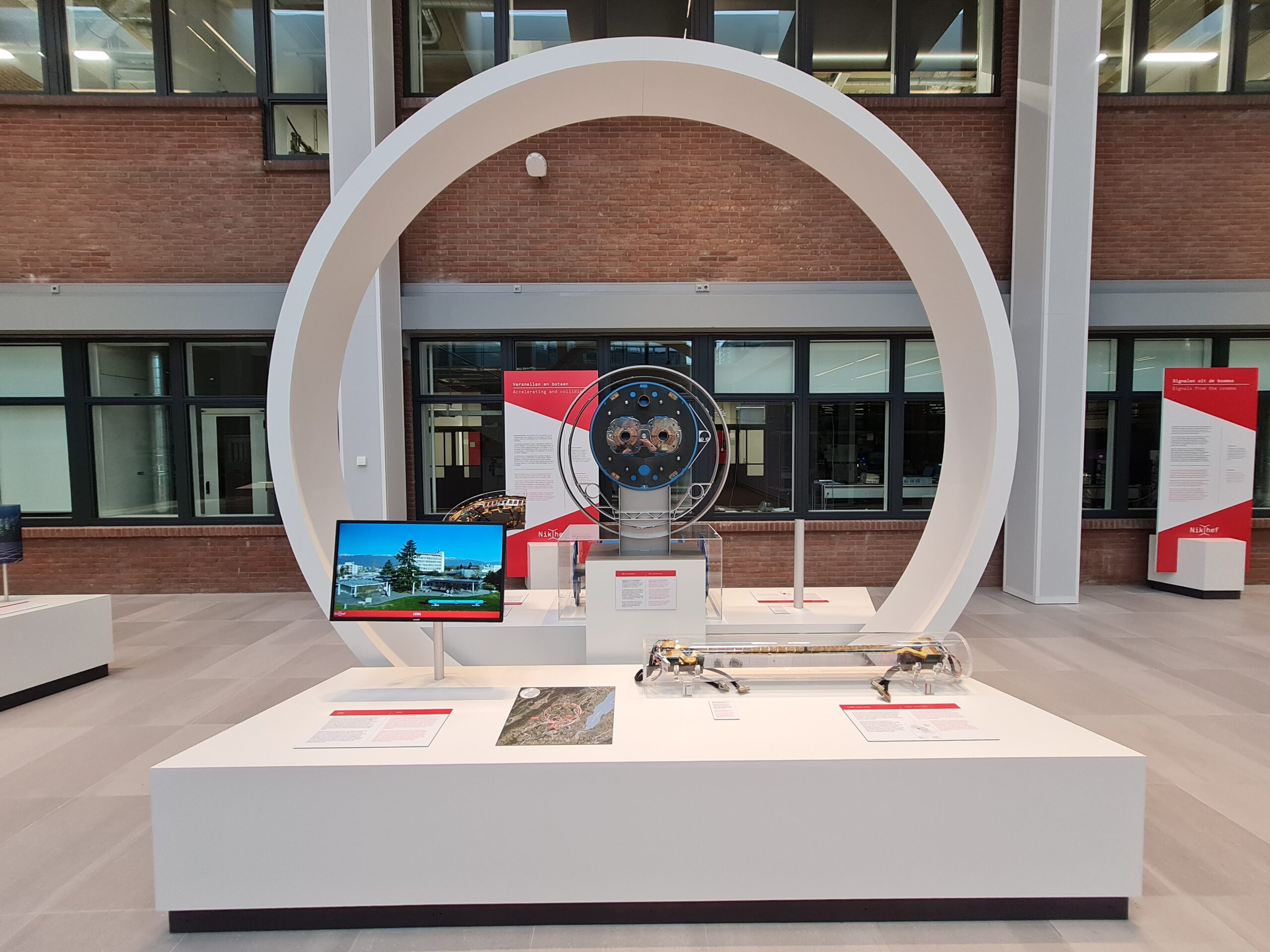
Shooting particles at each other with high energy reveals the interplay of forces at the very smallest scale. The collisions produce countless particles that fly away and create signals in the detectors. These detectors surround the collision locations somewhat like a huge digital camera. Researchers study the tracks to learn what happens at the collisions in detail, and then compare the results with what the theory predicts.
At CERN, the giant LHC accelerator delivers colliding protons or heavy atomic nuclei at high energy. Nikhef is involved in three major experiments at this accelerator: ATLAS, ALICE and LHCb. These three experiments each look at the collisions in their own way and with different research questions.
On display on this island
CERN
At CERN near Geneva, thousands of scientists and technicians from dozens of countries are working together to push our frontiers of knowledge about the particle world. CERN (Conseil Européen pour la Recherche Nucléaire) was founded in 1954 and has more than 20 member states. In addition to excellent physics research, the organization is strongly committed to international collaboration. The Netherlands is one of the cofounders of CERN and an important participant in the large experiments at the lab. Nikhef coordinates the Dutch contribution.
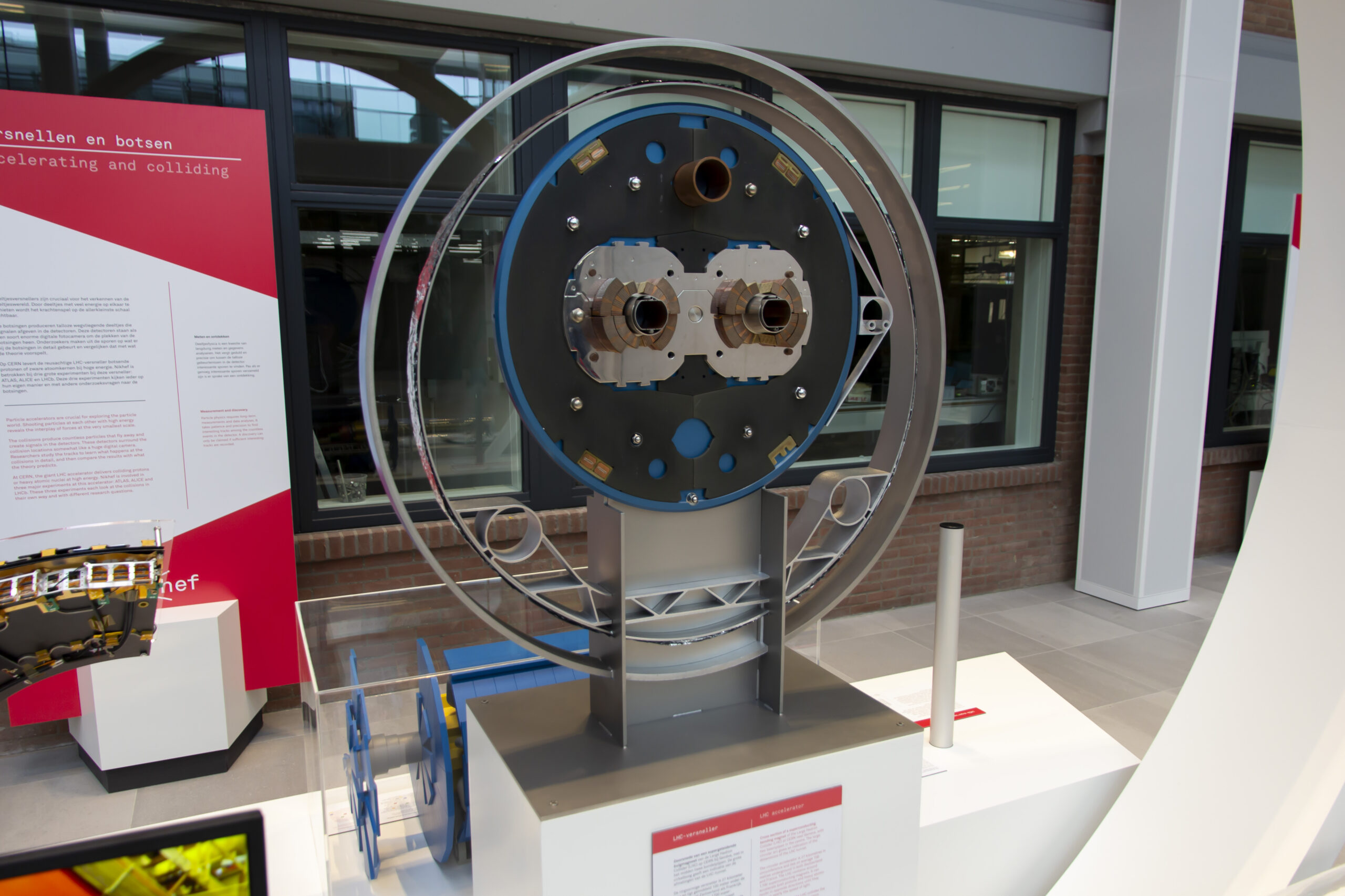
CERN is home to the world’s largest and most powerful accelerator for particle research, the Large Hadron Collider (LHC). The circular collider accelerates protons (or heavy atomic nuclei) in opposite directions to almost the speed of light. In a number of places, the particles collide with each other. There, large detectors register in extreme detail what happens during the collisions. Nikhef researchers are intensively involved in three of these experiments: ATLAS, ALICE and LHCb.
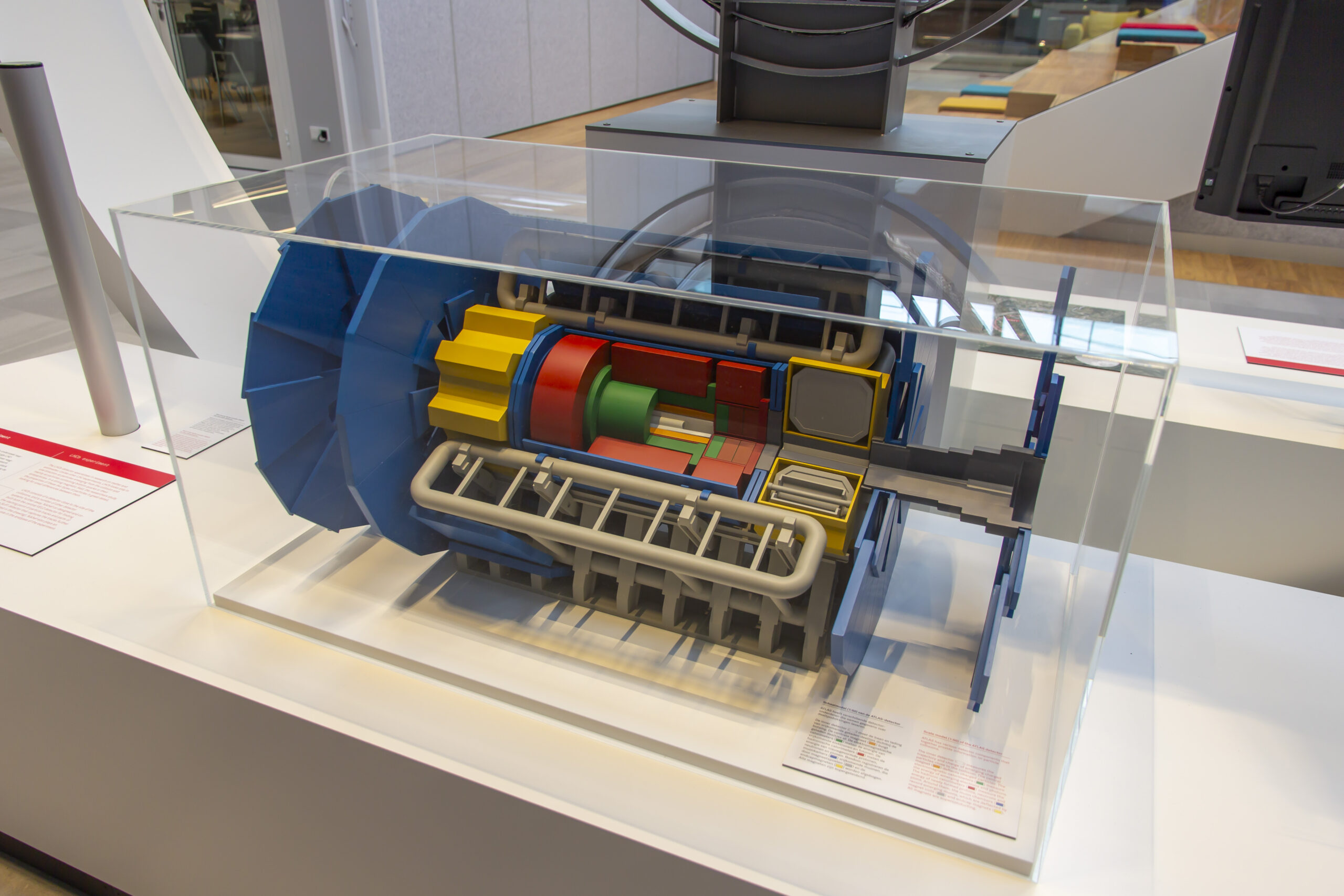
ATLAS-experiment
The ATLAS detector is the largest measurement instrument in the world, and intended for a wide range of particle research at high energy. An important object of study for ATLAS is the Higgs particle that explains how particles can have mass. In 2012, ATLAS, together with the CMS detector at CERN, discovered this particle, and has been studying its properties in increasing detail ever since.
ATLAS is a universal detector that can record the tracks of all kinds of different particles in detail. Nikhef has participated in the design and construction of several major components (red in the drawing) and is also closely involved in analysing the measurements. In recent years, the institute has been deeply involved in building a new central detector for ATLAS, the Inner Tracker or ITk.
ALICE-experiment
The ALICE detector was designed specifically to study a primordial form of matter called the quark-gluon plasma. This primordial matter must have once existed just after the Big Bang and physicists still have numerous questions about it. The seething mixture of nuclear matter is created when heavy atomic nuclei are shot at each other using the LHC accelerator, right in the middle of ALICE.
ALICE has a number of subsystems to measure specific processes and particles. Nikhef helped to build the inner detector of ALICE, the Inner Tracking System or ITS (red in the drawing). Recently, this inner detector was completely renewed. This new system was co-developed by Nikhef and partly built in Amsterdam. Nikhef also contributes to the analyses of the measurements from ALICE.
LHCb-experiment
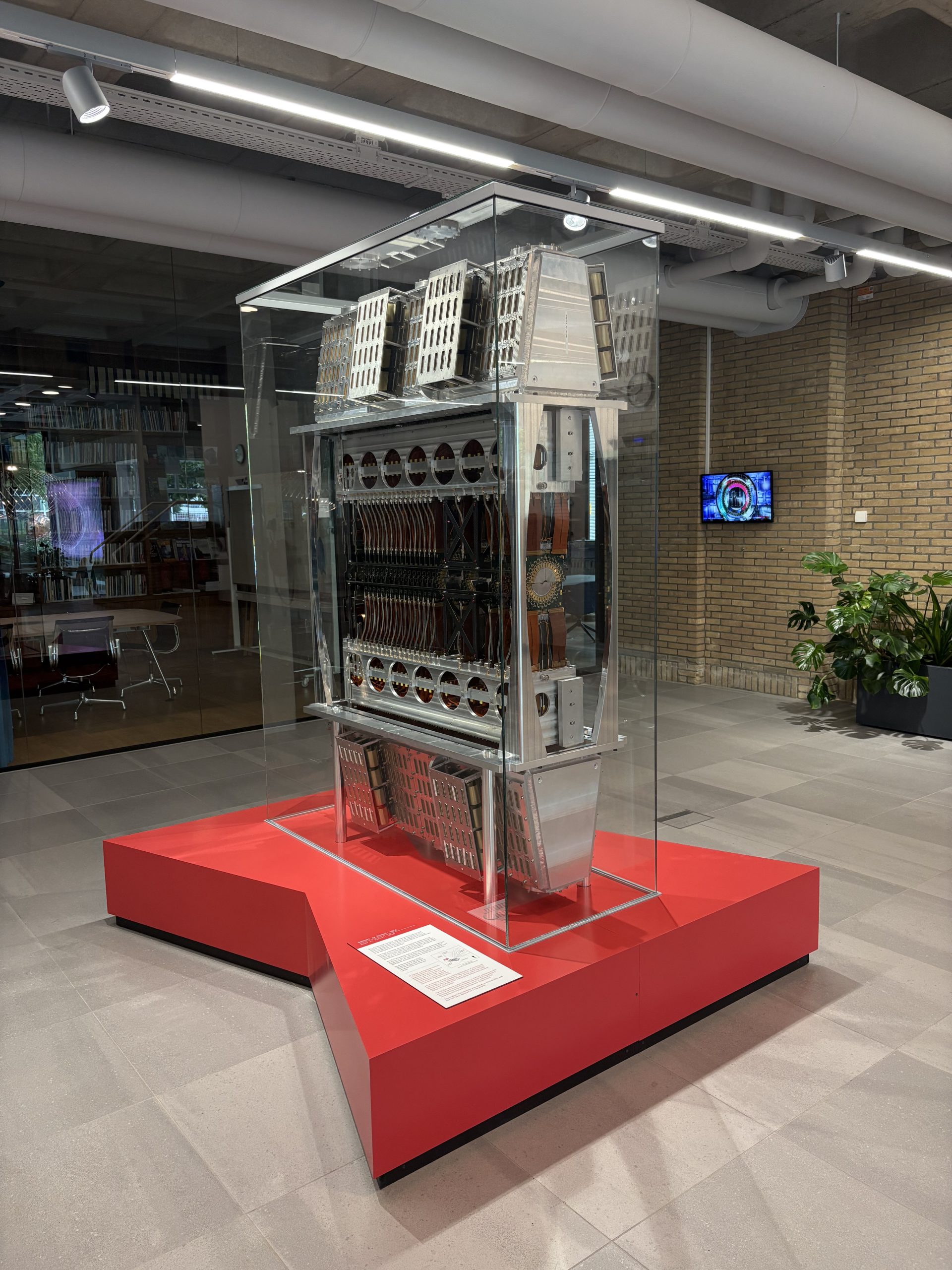
The LHCb detector specialises in research on matter and antimatter. Unlike other LHC experiments, LHCb looks only in one direction at particles emerging from the collision and mainly at particles containing bottom quarks or their antiparticles. In a strong magnetic field, the researchers study the properties of these two types of particles in great detail, looking for small differences between them.
LHCb consists of a detector close to the site of the collisions, and a number of other detector systems further away. Nikhef co-designed and co-built both the central VELO detector for finding the starting point of particle tracks and parts of the SciFi detector that captures the tracks further away (red in the drawing). Nikhef also plays an important role in the analyses of the experiment.